 Press
Social Media
Susie Ibarra Composition and Percussion
EXTENDED TALKING GONG ENSEMBLE
Claire Chase Flute
Alex Peh Piano
Levy Lorenzo Percussion
EXIRA QUARTET
Alpay Jan İnkilap Violin
Semaan Wehbe Violin
Bella Chich Viola
İdil Pulat Cello
Program
Sunbird
for Solo Flute
Paniniwala, Belief
for Solo Piano
Kolubrí
for Solo Percussion
Pulsation
for String Quartet
Talking Gong
for Flute, Piano, and Percussion
Intermission
Sky Islands
for Percussion, Flute, Piano, and String Quartet
German Premiere

Rhythm, Ritual, Ecology
For Susie Ibarra, rhythm is more than pulse or meter. It can be ecological: a way of understanding relationships among bodies, landscapes, memory, and sound.
Program Note by Thomas May
Rhythm, Ritual, Ecology
The Music of Susie Ibarra
Thomas May
For Susie Ibarra, rhythm is more than pulse or meter. It can be ecological: a way of understanding relationships among bodies, landscapes, memory, and sound. Born in California to Filipino parents, the composer, percussionist, and sound artist works across composition and performance, sound mapping, installation, recording, and documentary, with a long-standing engagement in environmental research and traditional musical cultures.
A dialogue between environment and music runs through much of Ibarra’s recent work. Her 2024 book Rhythm in Nature: An Ecology of Rhythm grew from studies of rhythm in birdsong, glacial freshwater, oceans, deserts, forests, and insects. CHAN: Sonnets and Devotions in the Wilderness, commissioned by the Berliner Festspiele’s MaerzMusik, comprises six contemporary kundimans: love songs addressed to landscapes ranging from German forests to Lake Tsongmo in the Himalayas and the Pasig River in Luzon. Water Rhythms: Listening to Climate Change, developed with glaciologist Michele Koppes, draws on field recordings from five global watersheds. Across these projects, environmental observation enters Ibarra’s compositional process through listening, field recording, rhythmic analysis, and responses to particular places.
Tonight’s concert marks Ibarra’s Pierre Boulez Saal debut—an especially personal occasion now that Berlin is her home—as well as the first German performance by the Talking Gong Trio and the German premiere of Sky Islands. In 2025, Ibarra received the Pulitzer Prize in Music for Sky Islands, cited as “a work about ecosystems and biodiversity, that challenges the notion of the compositional voice by interweaving the profound musicianship and improvisational skills of a soloist as a creative tool.”
Birds, Gongs, and Musical Lineages
Flutist Claire Chase has been one of Ibarra’s most important collaborators. Chase, Ibarra, and pianist Alex Peh form the Talking Gong Trio, whose close musical rapport provided the nucleus for Sky Islands. Ibarra has also written directly for Chase as a soloist, so that her distinctive sound world and improvisational imagination recur throughout the program.
Birdsong offers one meeting point between Ibarra’s environmental and musical interests. “I feel that birds are some of our oldest drummers on the planet,” she remarks. “I think we’ve been singing and playing their songs and their rhythms for a long time.” Birdsong does not necessarily enter her music as literal transcription: it may provide a rhythm or musical idea, or prompt a freer response to movement and character. Berlin itself has supplied another inspiration: Ibarra is fascinated by the city’s nightingales, whose long process of learning and practicing songs reminds her of the work musicians undertake themselves.
This evening’s program opens with two compact examples of the composer’s interest in birdsong. Sunbird, originally written for Chase, takes its cue from the purple Philippine sunbird. Ibarra translates avian color and sound into a flute language that moves among piccolo, flute, and bass flute, with percussive breath and vocalization folded into the texture. Kolubrí, for solo percussion, takes inspiration from the hummingbird, transferring its delicate vibrations into the lower-frequency world of drums and cymbals.
Between these bird-inspired works, Paniniwala, Belief turns the focus to Alex Peh alone at the piano. Ibarra has identified it among compositions “largely influenced by Philippine traditional gong music aesthetic,” showing how that influence extends beyond the gong instruments themselves.
Pulsation, written for the Kronos Quartet’s 50 for the Future project—a free repertoire of 50 new works for young and emerging string quartets—builds a continuous pulse into changing rhythmic pathways. Some patterns draw on signaling practices associated with Philippine kulintang traditions; cross-rhythms shift the listener’s sense of where a pattern begins and ends. Performers may also reorder sections and improvise within certain rhythmic cycles.
From Talking Gong to Sky Islands
The first half culminates in Talking Gong, the trio’s title work. Ibarra has described the ensemble as “a magical group” with a “beautiful rapport.” She also thinks of Talking Gong as an evolving composer-performer ensemble, one whose musical vocabulary continues to grow through the different situations and collaborators it encounters.
These shorter works thus gradually assemble the musical forces that come together after intermission: individual voices give way to quartet and trio before Sky Islands expands Talking Gong into an eight-player environment. As Ibarra describes it, “Sky Islands really is a Talking Gong piece, but it is extended.”
For this work, which premiered at Asia Society in New York in 2024, Ibarra added percussionist Levy Lorenzo and a string quartet, producing what she now describes as an “acoustic double quartet.” Sky Islands retains a clear identity while leaving spaces for performers to bring their own interpretation and musical personality. In Berlin, Chase, Peh, Lorenzo, and Ibarra are joined by the Exira Quartet, founded last year by students of the Barenboim-Said Akademie. Ibarra is particularly curious about what happens when musicians from different backgrounds enter the score’s improvisational spaces: connections emerge that, she says, “only can happen in the moment.”
The title Sky Islands refers to isolated high-altitude rainforests, including those found in Luzon in the Philippines. Geographically separated from surrounding habitats, such “sky islands” are biodiversity hot spots rich in rare and endemic species; their isolation can accelerate evolutionary differentiation.
Ibarra was drawn not only to this phenomenon but also to the different experience of time and rhythm associated with these environments. She describes places where “the rhythm is different, the ritual of that is different, even the species are different.” More recently she returned to the notion of “slow time.” In high-altitude forests less extensively organized around human use, she observes, patterns of growth, energy, frequency, and rhythm are experienced differently. Ecological structure thus feeds into musical structure rather than merely supplying the work with a subject.
The percussion language of Sky Islands is based on interlocking rhythms and sonorities associated with bamboo, gong, and flute traditions from the northern Philippines, including the Kalinga and Cordilleras region of Luzon. Alongside kulintang, sarunay, and agong, Ibarra and Lorenzo will play percussion, gongs, and live plants fitted with contact microphones. For this performance, Ibarra has adapted the work’s larger “floating garden” concept to the Pierre Boulez Saal, omitting sound sculptures used in some previous realizations.
Listening to Your Neighbor
Space itself becomes compositional material. At the opening, the two percussionists begin apart, playing long bamboo sticks and, as the score instructs, “introduce the sounds of the bamboo to the audience” before gradually converging. The interlocking rhythms reflect a listening practice Ibarra associates with traditional Philippine percussion music. Rather than orienting themselves around a fixed metric “one,” players listen laterally, locating the neighbor whose rhythm must be joined, until, as Ibarra says, “multiple people become one instrument.”
Movement alters the experience further. Ibarra is drawn to processional music because changing the musicians’ physical relationship also changes the sound heard by the audience. In earlier configurations, she conceived the two percussion stations as mirrors of one another, creating acoustic spatialization through performers and instruments rather than loudspeakers. For the Pierre Boulez Saal, she and Lorenzo will adapt that spatial conception to the hall’s oval architecture.
Improvisation opens additional spaces. Extended exchanges for kulintang and sarunay, and for drum set and agong, foreground the percussionists’ individual voices. Elsewhere, the string quartet improvises around Chase’s embellished flute line, while the piano adds what the score calls “small sounds within strings and flute.” Near the end, Chase improvises on bass flute before being joined by bells and “small forest sounds.”
Such freedoms do not erase the identity of the composition. Ibarra emphasizes that listeners still hear the essence of Sky Islands, while certain spaces invite performers to bring in what they do most distinctively. This balance between composed framework and individual agency recalls the Pulitzer citation’s reference to challenging conventional assumptions about “the compositional voice.”
Ritual enters the work just as concretely. Ibarra is interested not only in large ceremonial actions but also in small repeated practices that structure ordinary life. “Everybody has rituals,” she points out. She is also fascinated by music associated with different times and hours of the day—another way of hearing an ecosystem as a multitude of activities unfolding according to their own rhythms. In Sky Islands, repetition, listening, movement, and ensemble coordination take on this ritual dimension. The final procession makes it visible: the musicians form a line, each picking up a small percussion instrument as they move through the space.
The ecological concern is unmistakable, but Ibarra does not regard music as a substitute for scientific argument. Her artistic research often runs parallel to her creative practice: field recordings and other environmental research may enter a sound installation literally, while in music for live performers their influence can be indirect—a rhythm, a response, a way of attending to a place.
She works closely with climate scientists and notes that high-altitude cloud forests will become increasingly important as the climate changes. What art can do differently, she suggests, is reach memory and imagination through sound. A listener who has never entered a Philippine rainforest may nevertheless carry memories of trees, birds, or water. For Ibarra, music works on both an individual and a communal level: the same sound may awaken different memories in each listener, even as the act of listening together creates a collective experience.
Most listeners will never visit the remote ecosystems at the center of Sky Islands. Music, Ibarra suggests, can “bring a little bit of it” into another place and connect distant ecosystems to life where we are. This interplay between individual perception and collective listening is built into Sky Islands at every level. Species develop within a habitat; musicians bring their own languages into a score; interlocking rhythms depend on listening to one’s neighbor. The “floating garden” becomes an environment made audible through interdependence: eight musicians remaining themselves while learning, moment by moment, how to become one instrument.
Thomas May is a writer, critic, educator, and translator whose work has appeared in The New York Times, Gramophone, Opera Now, Musical America, Strings, and other publications. The English-language editor for the Lucerne Festival, he is also U.S. correspondent for The Strad and program annotator for the Los Angeles Master Chorale and the Ojai Festival.
The Artists
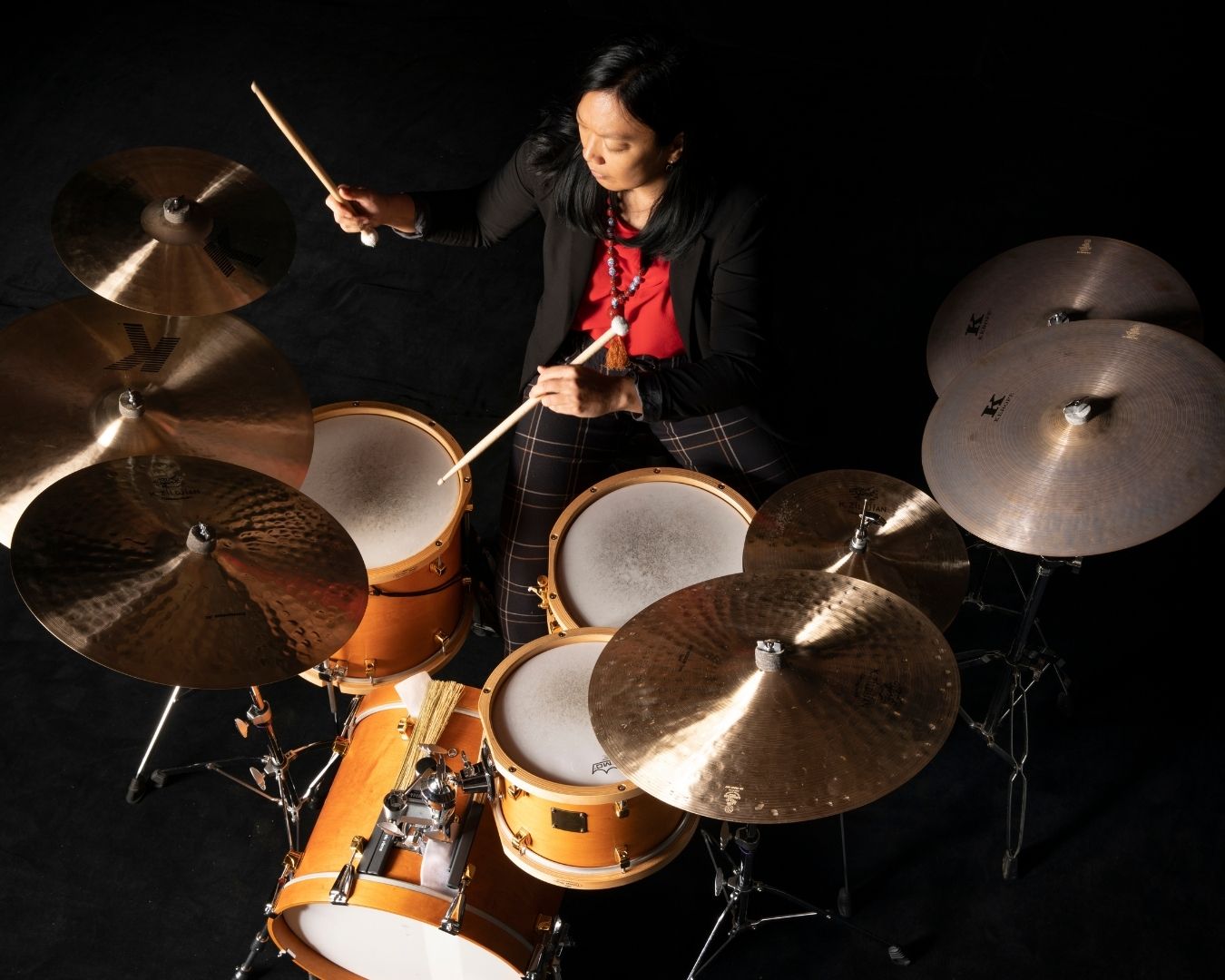
Susie Ibarra
Composition and Percussion
Susie Ibarra is a Filipinx-American composer, percussionist, and sound artist. She is the founder of the Susie Ibarra Studio, co-founder of the Habitat Sounds label, and leads several ensembles, including the Talking Gong Trio with Claire Chase and Alex Peh. In her interdisciplinary work, she supports indigenous and traditional musical cultures, such as “musika katutubo” in the Philippines; advocates for the protection of glaciers and drinking water; and supports educational projects for women and girls through the Joudour Sahara project in Morocco. In 2025, she received the Pulitzer Prize for Music for her composition Sky Islands, which was inspired by the endangered rainforests of Luzon. Susie Ibarra has also been honored with the Creative Capital Artist Award and the Charles Ives Fellowship from the American Academy of Arts and Letters. As a fellow of the DAAD’s Berlin Artists-in-Residence Program, she composed the piece CHAN: Sonnets and Devotions in the Wilderness in 2024–25, commissioned by the Berliner Festspiele’s maerzmusik. Her book Rhythm in Nature: An Ecology of Rhythm was published in 2024.
October 2026
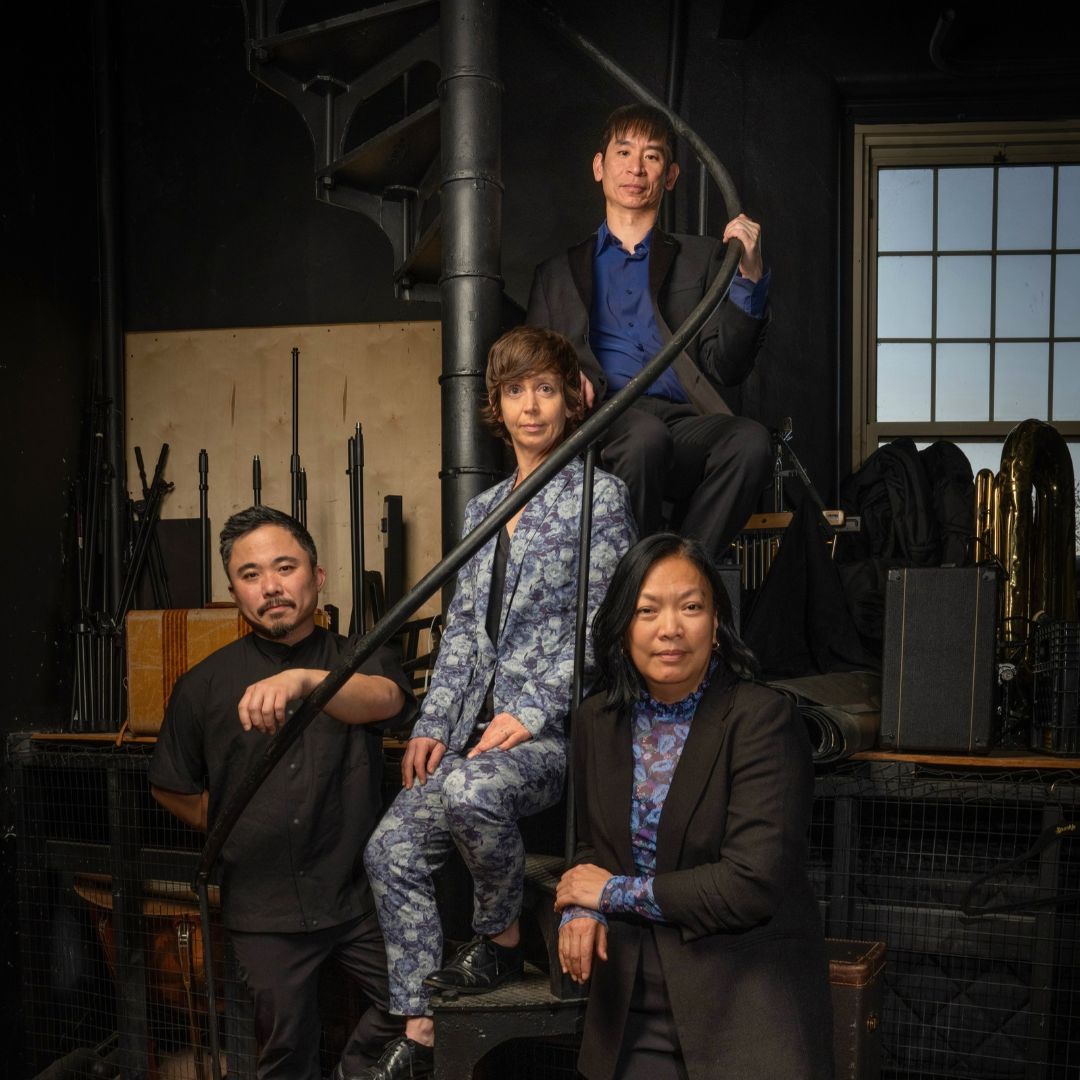
Claire Chase
Flute
Claire Chase works internationally as a musician, interdisciplinary artist, curator, and educator. In 2012, she became the first flutist ever to receive a MacArthur Fellowship, and in 2017, she won Lincon Center’s Avery Fisher Prize. In the 2022–23 season, she held the Richard and Barbara Debs Creative Chair at Carnegie Hall in New York, and in 2025 she served as music director of the Ojai Festival. As a soloist, she has recently performed with the New York Philharmonic, Los Angeles Philharmonic, San Francisco Symphony, BBC Scottish Symphony, Munich Chamber Orchestra, and London’s Philharmonia Orchestra, among others. She has premiered several hundred compositions, including most recently a new double concerto for flute and violin by Dai Fujikura with the Netherlands Radio Philharmonic and a new work by Felipe Lara with singer and bassist esperanza spalding and the Helsinki Philharmonic conducted by Susanna Mälkki. Claire Chase is a professor at Harvard University and a Creative Associate at the Juilliard School in New York.
October 2026
Alex Peh
Piano
Pianist Alex Peh received his musical training at Indiana University and Northwestern University in the United States, where his teachers included Arnaldo Cohen, Menahem Pressler, Sylvia Wang, and Evelyne Brancart. He also worked closely with Emanuel Ax, Pamela Frank, Claude Frank, Peter Serkin, and others at the festivals in Aspen, Banff, and Tanglewood. As a 2021 Fulbright Global Scholar, he delved deeply into global piano traditions and released the collaborative album Attune with pianists Nikos Ordoulidis (Greece), Ne Myo Aung (Myanmar), and Pooyan Azadeh (Iran/Germany). He also studied the distinctive Burmese Sandaya piano style with U Yee Nwe and Kyaw Kyaw Naing in Myanmar as an Asian Cultural Council Fellow. Alex Peh is an associate professor at SUNY New Paltz.
October 2026
Levy Lorenzo
Percussion
Working at the intersection of music, art, and technology, Filipino-American Levy Lorenzo trained as an electrical and computer engineer at Cornell University and as a percussionist at Stony Brook University. His artistic practice spans electronics design, sound engineering, instrument building, installation art, and percussion performance. He designs interactive electronics ranging from small sculptures to large-scale public art installations, collaborating with artists such as Alvin Lucier, Christine Sun Kim, LigoranoReese, Autumn Knight, and Leo Villareal. As a musician, he has worked with artists including Peter Evans, Tyshawn Sorey, Anna Thorvaldsdottir, George Lewis, Henry Threadgill, and the late Ryuichi Sakamoto, among others. As a sound engineer, he is in demand as a specialist in the realization of complete electroacoustic concerts. His work was featured at the MoMA PS1, MIT Media Lab, Pitchfork, the BBC, and Burning Man, among others. Levy Lorenzo is a core member of the renowned International Contemporary Ensemble (ICE) and teaches as Professor of Creative Technologies at The New School, where he also directs the Nstruments Lab.
October 2026
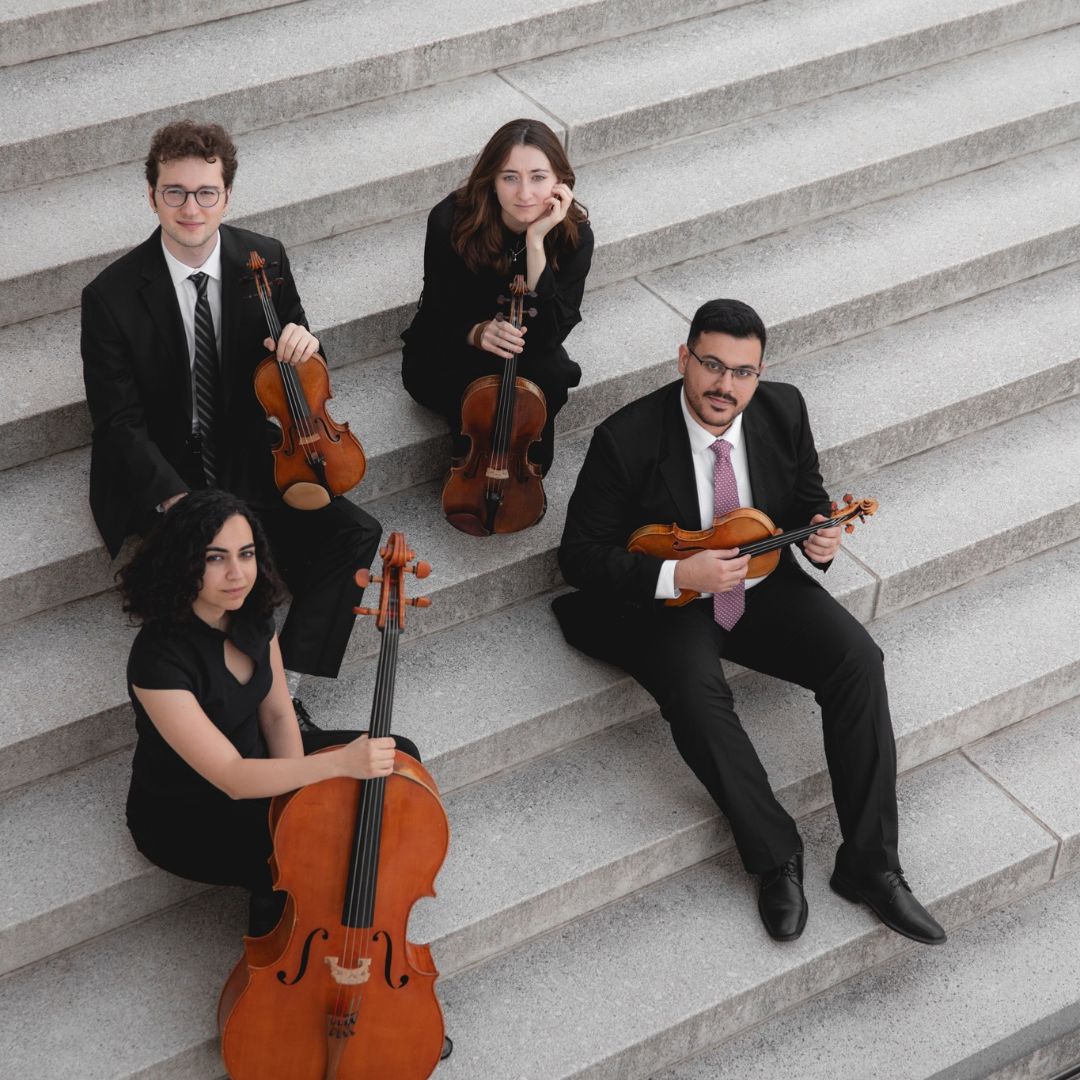
Exira Quartet
The Exira Quartet was founded in 2025 by young musicians from Turkey, Lebanon, and Russia who graduated from the Barenboim-Said Akademie. Inspired by Daniel Barenboim and Edward W. Said, they see their ensemble as a space where different traditions, cultures, and experiences can come together and engage with one another through music without sacrificing their individuality. In their work, they bring the European string quartet tradition into dialogue with music from the Middle East—particularly Turkey and Lebanon—and are especially interested in the spaces between supposedly opposite and separate musical worlds. The Exira Quartet is currently pursuing a master’s degree at the Folkwang University of the Arts in Essen with Suyeon Kang, the second violinist of the Belcea Quartet. The ensemble has also worked with Daniel Barenboim, Michael Barenboim, Krzysztof Specjal, Mihaela Martin, Rainer Honeck, and the Diotima Quartet. Concerts have taken them to the Casa del Quartetto in Reggio Emilia, the Pierre Boulez Saal, the Berlin Museum of Musical Instruments, and most recently to the Konz Music Festival.
October 2026