 Press
Social Media
Press
Social Media
Mon, November 10, 2025 at 6:00 PM
AKADEMIE FORUM: YEHOUDA SHENHAV-SHAHRABANI
Lecture and Reading: Translating Elias Khoury
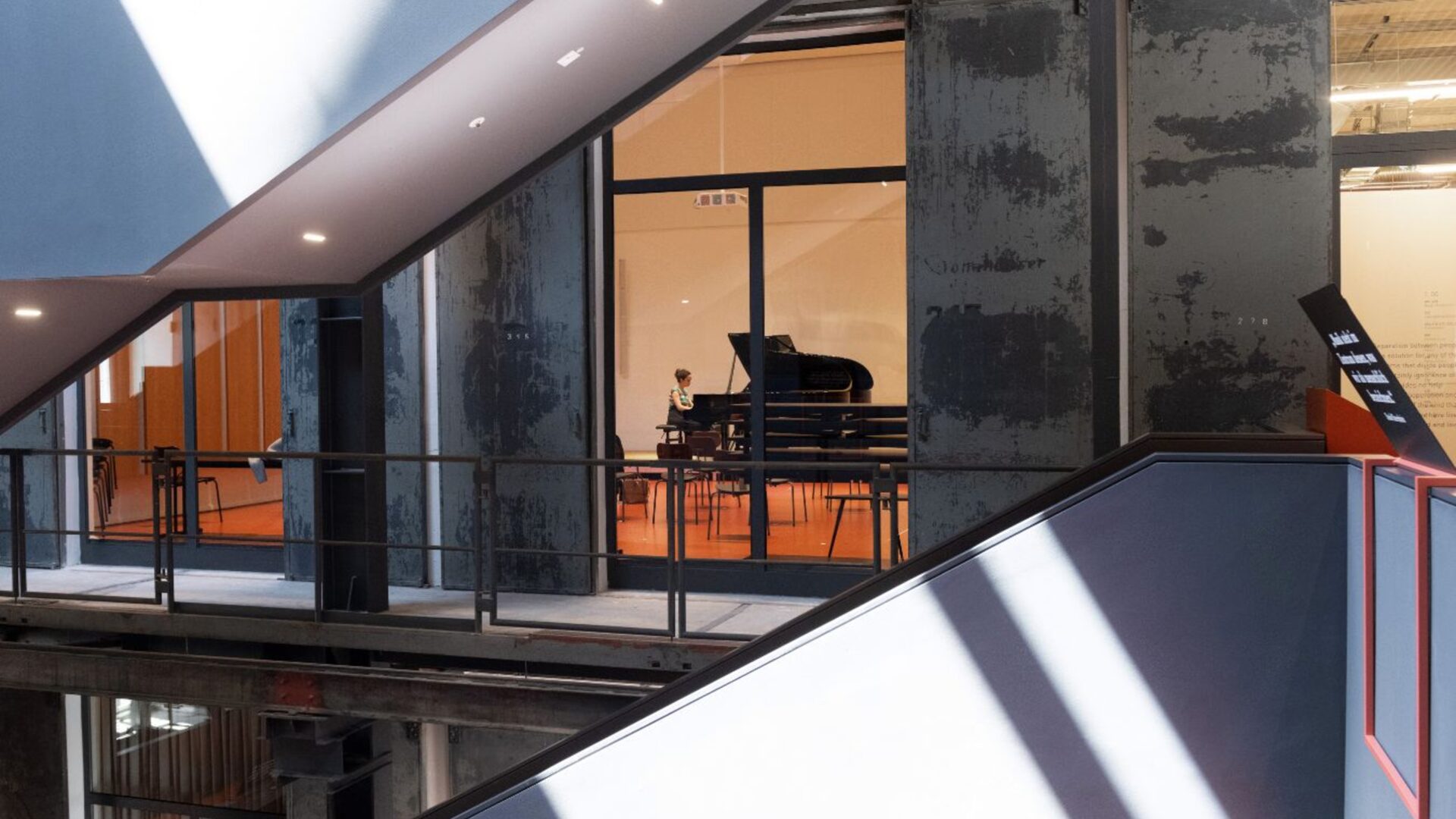
Pierre Boulez Saal - Mozart Auditorium
Where the Living and the Dead Communicate:
Translating Elias Khoury
Lecture and Reading
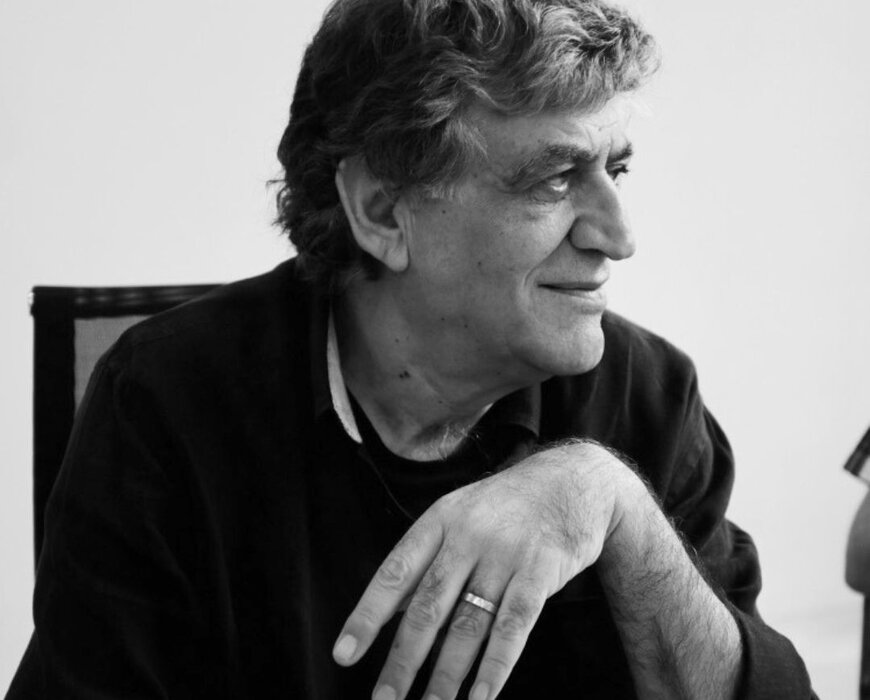
What does the “death of the author” mean when it is no longer a metaphor but a lived loss? Yehouda Shenhav-Shahrabani remembers the Lebanese novelist Elias Khoury, his close friend who passed away a year ago. Khoury was one of the most influential Arab writers of his generation and had devoted much of his work to the Palestinian Nakba and its political and personal repercussions. He was also Shenhav-Shahrabani’s partner in developing a unique model of “translation in dialogue,” a practice of conversation between author and translator that opens a third creative space.
Shenhav-Shahrabani takes a close look at the delicate balance between suspicion and freedom, loyalty and betrayal, in the relationship between writer and translator. In his ongoing, posthumous translation of Khoury he finds a new practice of mourning, one especially attuned to Khoury’s own idea that “fiction becomes a space where the living and the dead communicate.” Remaining in dialogue with a silenced voice, translation turns into an art of memory, fidelity, and continuity.
Yehouda Shenhav-Shahrabani is an Arab Jew. He is professor emeritus of Sociology at Tel Aviv University and Chief Editor of Maktoob, a book series for the translation of Arabic literature at the Van Leer Jerusalem Institute. Among his books are Manufacturing Rationality (2002), The Arab Jews (2006), and Beyond the Two-State Solution (2014). He has translated 20 novels from Arabic to Hebrew, among them 12 by Elias Khoury, and others by Salman Natour, Mahmoud Shukair, Ali Al-Muqri, Samuel Shimon, and Eyad Bargouti, among others.
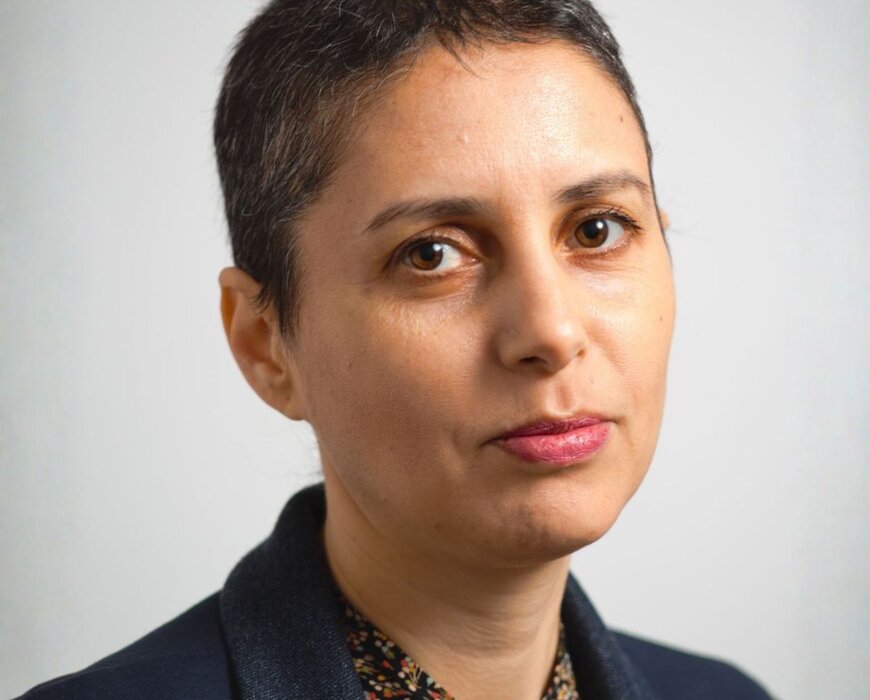
Zahiye Kundos is a scholar of modern Arabic and Middle Eastern Studies who specializes in Arabic literature and the Nahda, the cultural and intellectual history of modern Arabic and Islamic thought. She is also an essayist, engaged with contemporary debates on matters of interest to Palestinian and Muslim cultures and societies. Her recent publications include “Amina and the Breaking of the Secular Silence: Revisiting the Cairo Trilogy by Naguib Mahfouz.” Her forthcoming book is Experiencing Islam in Modernity.
Presented in English
With a musical contribution by Mihály Boros (piano), student of the Barenboim-Said Akademie.
Artists
Speaker
Reading
Presenter
PARTNER
YOUR VISIT
How To Get There
Mozart Auditorium
Barenboim-Said Akademie
Französische Straße 33d
10117 Berlin
Germany
_____
Public Transport
U-Bahn U2 Hausvogteiplatz, U5 Museumsinsel, U6 Unter den Linden
S-Bahn S / U Friedrichstraße
Tram M1, 12 Mitte / Am Kupfergraben
Bus 147 Werderscher Markt; 100, 300, N5 Staatsoper
Bicycle
Bicycle racks are available on the street “Hinter der Katholischen Kirche.”
Car
Q-PARK parking garage Unter den Linden / Staatsoper
Bebelplatz 2
10117 Berlin
Theater rate (5.30 pm – 11.30 pm, paid in advance): €10
Please note there is a construction site across from the hall on Französische Straße. The street is narrowed, and cars or taxis are not allowed to stop in front of the Pierre Boulez Saal entrance.
Accesibility
To book wheelchair-accessible seating, other seats for visitors with disabilities, or companion seats, please contact us directly.
+49 30 4799 7411
tickets@boulezsaal.de
All wheelchair seats are accessible by elevator.
In order to make access as easy as possible, we kindly ask that you inform us of your requirements when booking your tickets.
Restrooms for visitors with disabilities are located in the basement and on the first floor.
Four parking spaces for visitors with disabilities are available on the street "Hinter der Katholischen Kirche".