 Press
Social Media
Press
Social Media
Jörg Widmann Clarinet
Florian Donderer Violin
Annette Walther Violin
Xandi van Dijk Viola
Thomas Schmitz Cello
Program
Joseph Haydn
String Quartet in C major Hob. III:39 Op. 33 No. 3 "The Bird"
Hugo Wolf
Italienische Serenade for String Quartet in G major
Max Reger
Clarinet Quintet in A major Op. 146
Joseph Haydn (1732–1809)
String Quartet in C major Hob. III:39 Op. 33 No. 3 "The Bird" (1781)
I. Allegro moderato
II. Scherzo. Allegretto
III. Adagio ma non troppo
IV. Finale (Rondo). Presto
Hugo Wolf (1860–1903)
Italienische Serenade for String Quartet in G major (1887)
Molto vivo
Intermission
Max Reger (1873–1916)
Clarinet Quintet in A major Op. 146 (1915)
I. Moderato ed amabile
II. Vivace
III. Largo
IV. Poco allegretto
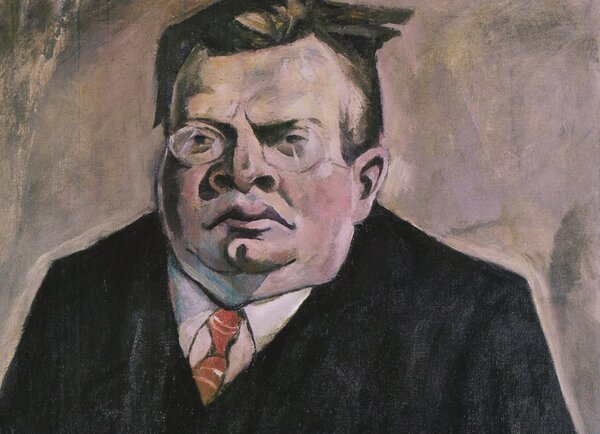
Max Reger, portrait by Max Beckmann (1917)
Birdsong, Serenade, Farewell
Tonight’s program continues Jörg Widmann’s exploration of the clarinet quintet and its lineage—how composers have used a small ensemble to test out new colors, new balances, and new ways of letting instruments speak together. Max Reger’s late Clarinet Quintet stands at the center of that inquiry, heard alongside two string quartets that illuminate how different—and how flexible—chamber writing can be across more than a century.
Program Note by Thomas May
Birdsong, Serenade, Farewell
Music by Haydn, Wolf, and Reger
Thomas May
Tonight’s program continues Jörg Widmann’s exploration of the clarinet quintet and its lineage—how composers have used a small ensemble to test out new colors, new balances, and new ways of letting instruments speak together. Max Reger’s late Clarinet Quintet stands at the center of that inquiry, heard alongside two string quartets that illuminate how different—and how flexible—chamber writing can be across more than a century.
Joseph Haydn’s Op. 33 Quartets announced what he himself called a “new and special way,” marked by sharpened thematic design, rhythmic wit, and a finely judged play of expectation; the “Bird” Quartet is one of the most vivid examples of this renewal. Hugo Wolf’s Italian Serenade comes from a brief period before the great song cycles of his peak years and is cast in a single, quick-moving movement with the tautness of a dramatic scene. Reger’s Quintet, written in 1915 as his final completed work, is strikingly inward and transparent—a late style pared back to essentials, often heard as a personal leave-taking.
Haydn’s “New and Special Way”
Joseph Haydn did not even begin using the term string quartet until the Op. 33 set from the early 1780s; before that, he preferred “divertimento.” He tended to write quartets in batches, publishing them in sets of six, as he did with this group from the summer and autumn of 1781. Following the first performances—reportedly given on Christmas Day—the publishing firm of Artaria issued the six Quartets in 1782, the year Haydn turned 50. Mozart, newly settled in Vienna, was captivated by them, and the two composers soon forged a friendship that would transform the quartet genre.
Haydn dedicated his Op. 33 to Grand Duke Paul of Russia (later Emperor Paul I), and the six works are therefore sometimes called the “Russian” Quartets. He told his patrons that they were “written in a new and special way.” That famous description has invited a wide spectrum of interpretations from commentators—some dismissing it as a shrewd bit of marketing meant to generate buzz, while others, such as the Haydn authority H.C. Robbins Landon, declared: “To anyone with a pair of ears, it should be obvious that Op. 33 is certainly written in a new and special way.”
In any case, there is no doubt that Haydn recalibrated his approach in these Quartets. The writing is leaner and more pointed; themes are built from smaller, more malleable ideas; and the play of expectation becomes a structural tool rather than an occasional joke. Op. 33 No. 3 in C major, nicknamed “The Bird,” shows this sharpened profile immediately. The opening movement has a bright, quick-footed surface, yet Haydn’s counterpoint keeps it from mere prettiness: the four players continually echo, tease, and outmaneuver one another.
The opening gestures unfold as a teasing exploration of tonality that alternately seizes and lets go of the home key in surprising feints. The quick grace notes and trills that gave the quartet its nickname (not Haydn’s own) draw on a long tradition of musical birdsong—from Baroque concerti like the “Spring” Concerto in Vivaldi’s Four Seasons to the playful figuration common in Classical virtuosity—but Haydn uses the gesture not for pictorial effect but as an agile flicker that animates the movement’s tightly knit argument.
Although Haydn calls the second movement a scherzo—his new term for what had traditionally been a minuet—its poise and phrasing still lean toward the older model. Much of the material sits low in the strings, giving the movement a slightly earthy, close-to-the-ground sonority and contrasting effectively with the brief return of “bird” flutterings on high in the trio.
The third movement, marked “Adagio ma non troppo,” takes a lyrical turn: its lines are more relaxed and spacious, and the Quartet’s textures open up—voices separate and pair off, duets giving way to fuller ensemble passages. Haydn’s new friend Mozart must have been especially enchanted by the contrast in mood between the Adagio’s intimacy and the unbuttoned comedy of the rondo finale. With irresistible momentum, Haydn’s avian humor takes flight once more. Rapid exchanges generate an exhilarating bustle, full of feints, sidesteps, and perfectly timed surprises. The surface is light, but the craftsmanship beneath it is meticulous—Haydn’s “new and special way” in full flourish.
A Chamber-Sized Drama
Hugo Wolf lived a brief, fevered life in late 19th–century Vienna, a generation after Brahms and as a contemporary of Mahler. He is best known for writing lieder that are hyper-attuned to the emotional and psychological states of the characters in the poems he sets, distilling the harmonic daring and compression of Wagnerian drama into miniature. Wolf’s career unfolded in bursts of inspiration and collapse: by his mid-30s, he was already struggling with the effects of syphilis, which silenced him well before his death at 42.
Wolf wrote little chamber music beyond an early String Quartet in D minor (1878), a brief Intermezzo in E flat, and the Italian Serenade of 1887—his one enduring success in the medium. It was composed just before the eruption of his great song cycles, the Mörike Lieder (1888) and Eichendorff Lieder (1889), during a brief moment when Wolf turned from song to instrumental narrative.
In a letter from that year, Wolf described the Italian Serenade as the opening of a projected multi-movement suite inspired by Joseph von Eichendorff’s novella Aus dem Leben eines Taugenichts (Memoirs of a Good-for-Nothing), a Romantic tale of a wandering musician whose blend of irony, charm, and bittersweet fantasy clearly spoke to him. He later orchestrated the movement, but the remaining sections of the suite were never written. Illness and creative instability cut the plan short, leaving this single movement as a remnant—and miniature masterpiece.
The Italian Serenade’s mercurial tone and razor-fine elegance recall the conversational spirit of the Classical quartet, but refracted through late-Romantic irony—Haydn’s quicksilver give-and-take transformed into a single, restless span of perpetual motion. Its harmonic turns, sudden dynamic shifts, and high-voltage rhythmic energy make it feel at once self-contained and theatrical, a kind of chamber-sized scena turned feverish and self-aware.
A Late-Style Farewell
Born 13 years after Wolf—both were similarly short-lived—and one year before Arnold Schoenberg, Max Reger entered the late-Romantic world with a very different set of instincts that made his orientation more contrapuntal and historically minded. He revered Brahms yet absorbed the harmonic saturation of Wagner—an inheritor caught between rigor and excess.
Reger composed his Clarinet Quintet in A major in 1915–6, while Europe was at war and during his final creative period. It was his last completed work. In this context, it feels like a gesture of retreat—an inward summation rather than a public statement. The genre itself carries a distinguished ancestry: Mozart’s Clarinet Quintet set the archetype of the clarinet entwined with a four-string texture, and Brahms, in his own late years, transformed that model into something autumnal and shadowed. Reger clearly acknowledges that lineage—not by imitation, but by embracing the clarinet quintet form as a vehicle for reflection and leave-taking.
The Clarinet Quintet unfolds in four movements. The first carries an unforced warmth reminiscent of Wagner’s gentler pages—especially the mature lyricism of Die Meistersinger. But the kinship is atmospheric rather than direct. What begins as a seemingly consonant glow is immediately unsettled by Reger’s trademark chromatic inflections and tonal sidesteps. The clarinet spins long, pliant lines frequently marked espressivo and dolce—Reger’s way of insisting that warmth and lyrical pressure remain constant even as the harmony keeps slipping away.
The rapid-fire second-movement scherzo shifts to the minor, subtly mixing colors of muted (violins and cello) and unmuted (viola) strings against Reger’s rhythmic intricacies, relieved by a trio in the major. The ensuing, elegiac Largo turns toward the inwardness characteristic of Reger’s late style, its long clarinet lines floating over muted strings.
Reger had long favored theme-and-variation form, but in the finale, he uses it in a transformed way: what was once a vehicle for large-scale contrapuntal display becomes a chain of eight variations, each one shading the theme rather than amplifying it. The movement gradually thins toward dissolution. The final bars settle into A major—the key of Mozart’s Clarinet Quintet, incidentally—an unmistakable nod to a legacy Reger revered, and a farewell of his own.
Thomas May is a writer, critic, educator, and translator whose work appears in The New York Times, Gramophone, Strings, Chorus America’s The Voice, and other publications. The English-language editor for the Lucerne Festival, he is also U.S. correspondent for The Strad and program annotator for the Los Angeles Master Chorale and the Ojai Festival.
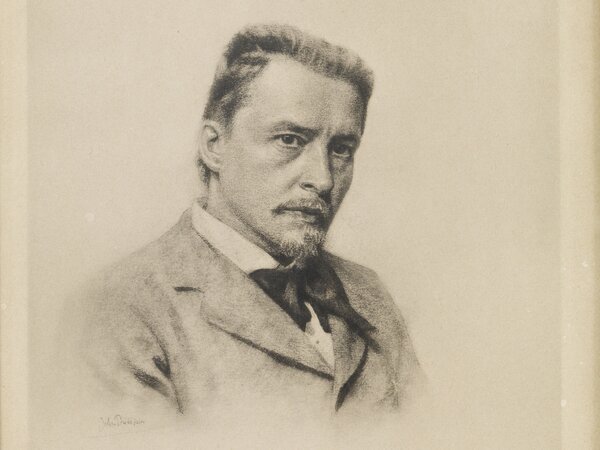
Hugo Wolf, drawing by John Philipp (c. 1900) (Wien Museum)
Visionen und Rückblicke
Wer Jörg Widmanns saisonübergreifende Konzertreihe im Pierre Boulez Saal verfolgt hat, dürfte kaum überrascht sein, dass heute Max Reger auf dem Programm steht. Regers Opus 146 bildet nach den Klarinettenquintetten von Mozart, Weber und Brahms, die in den vergangenen zwei Jahren hier zu hören waren, den nächsten Meilenstein in der Geschichte der Gattung.
Essay von Meike Pfister
Visionen und Rückblicke
Werke von Haydn, Wolf und Reger
Meike Pfister
Wer Jörg Widmanns saisonübergreifende Konzertreihe im Pierre Boulez Saal verfolgt hat, dürfte kaum überrascht sein, dass heute Max Reger auf dem Programm steht. Regers Opus 146 bildet nach den Klarinettenquintetten von Mozart, Weber und Brahms, die in den vergangenen zwei Jahren hier zu hören waren, den nächsten Meilenstein in der Geschichte der Gattung. Und als sei es eine Zwangsläufigkeit dieser Besetzung, sticht in Regers Quintett wie bei seinen Vorbildern der introvertierte und verklärte Charakter der Musik hervor. Dass dieses rückwärts gewandte Werk, über dem „es ruht wie der tiefe, heilige Friede eines milden Herbstabends“, wie es in einer Kritik nach der Uraufführung im Jahr 1916 hieß, zu Regers Schwanengesang werden sollte, ist auf makabre Weise stimmig. Der Komponist starb nur wenige Monate später im Alter von 43 Jahren an Herzversagen.
Weit in die Zukunft blicken hingegen Joseph Haydns Streichquartette op. 33. Nachdem der Komponist bereits mit seinen Quartetten op. 20 der jungen Gattung ersten Atem eingehaucht hatte, schlug er mit den 1782 erschienenen sechs „Russischen“ Quartetten nun eine neue Richtung ein und setzte damit Maßstäbe für alle künftigen Quartettkomponist:innen. Auf „eine gantz neu Besondere Art“ seien sie geschrieben, erklärte Haydn selbst – geistreicher Witz, satztechnische Raffinesse und gleichzeitig volkstümliche Leichtigkeit kennzeichnen diese neue Ästhetik.
Nicht minder humorvoll als Haydn und dabei ebenso romantisch wie Reger gibt sich Hugo Wolfs Italienische Serenade. Wie ein flüchtiges Intermezzo innerhalb des heutigen Programms erklingt der 1887 entstandene Quartettsatz, der – mehr noch als Wolfs wenige Jahre zuvor entstandenes Streichquartett d-moll – inzwischen zum Standardrepertoire der Quartettliteratur gehört.
Gewitzt: Haydns Streichquartett op. 33 Nr. 3
In Wolfs Italienischer Serenade wie in Haydns op. 33 Nr. 3 eröffnen die Begleitstimmen das musikalische Geschehen. Über dem durch Tonrepetitionen erzeugten Puls entfaltet sich dann in beiden Werken das Hauptthema in der ersten Violine – es fliegt darüber, könnte man im Falle von Haydns sogenanntem „Vogelquartett“ fast sagen. Allerdings stammt dieser Beiname, der wohl durch die „zwitschernden“ Vorschlagsnoten gleich zu Beginn des ersten Satzes motiviert ist, wie so oft nicht vom Komponisten selbst.
Zu Zeiten von Hugo Wolf war ein solcher schwebender Beginn längst keine Überraschung mehr – im Falle von Haydn aber sehr wohl. Gerade die Gattung des Streichquartetts, die von Anfang an einem bildungsbürgerlichen Kontext von Kennerinnen und Liebhabern verpflichtet war, bot ihrem Schöpfer den idealen Raum, mit tradierten Hörerwartungen zu spielen. Das völlig unvermutete d-moll, mit dem Haydn das zuvor in heiterem C-Dur erklingende Hauptthema ein zweites Mal aufgreift, entspricht ebenso der für ihn so typischen Ästhetik des Witzes – wobei der Begriff „Witz“ sich in diesem Zusammenhang auf eine ästhetische Kategorie des 18. Jahrhunderts bezieht, die für ein geistreiches Spiel mit Regeln und Normen steht.
So finden sich in den Quartetten op. 33 anstelle der Menuette auch erstmals Scherzi – eine Satzbezeichnung, die dem Witzigen explizit den Weg ebnet. Dass es nicht mit dem Komischen zu verwechseln ist, zeigt das Scherzo des „Vogelquartetts“ beispielhaft: Lyrisch und fast sakral klingt der „sotto voce“ (mit gedämpfter Stimme) zu spielende zweite Satz – witzig also, weil ganz anders, als es das übliche Menuett an dieser Stelle erwarten ließe, aber sicherlich nicht zum Lachen animierend. (Da Haydn die Bezeichnung Scherzo nur in den Quartetten op. 33 verwendet, existiert neben der Bezeichnung „Russische Quartette“, die auf die Widmung an den russischen Großfürsten Paul zurückgehende, für die sechs Werke auch der Beiname „Gli scherzi“.)
Ebenso gewitzt wie als Komponist war Haydn als Geschäftsmann. Für sein Opus 33 verfolgte er eine fast schon moderne Marketing-Strategie: Er erteilte Exklusivrechte an Subskribenten, die zum Preis von sechs Dukaten Abschriften der Quartette schon vor der offiziellen Veröffentlichung erwerben konnten. Daran lässt sich ablesen, wie einträglich das Komponieren von Streichquartetten damals bereits war.
Nur zehn Jahre waren vergangen, seit Haydn im Jahr 1772 mit seinen Quartetten op. 20 den Grundstein für die Gattung gelegt hatte. Nicht nur die viersätzige Form war seither verbindlich geworden, sondern auch die Emanzipation der Unterstimmen von ihrer reinen Begleitfunktion – alle vier Instrumente sollten nun aktiv und eigenständig am musikalischen Diskurs beteiligt sein. Nach Emanzipation und Autonomie strebte zur gleichen Zeit auch das Bürgertum, und so dürfte der Komponist und Theoretiker Heinrich Christoph Koch eigentlich nicht überrascht gewesen sein, als er 1793 feststellte, „das quatuor“ sei „anjetzt das Lieblingsstück kleiner musikalischer Gesellschaften“ geworden.
Impulsiv: Hugo Wolfs Italienische Serenade
Für systematische Ansätze, Musiktheorie und die Auffassung des Komponierens als Handwerk hatte Hugo Wolf kaum mehr als Verachtung übrig. „Ich bin ein Mensch, der in allem nur nach Impulsen handelt, und wenn sich in mir die gehörige Portion Elektrizität angesammelt hat, dann geschieht etwas.“ Diese Haltung machte den in Wien lebenden Komponisten regelmäßig zur Zielscheibe harscher Kritik, etwa von Seiten seines Studienfreundes Gustav Mahler oder des eine Generation älteren Johannes Brahms. Letzteren hatte Wolf Anfang der 1880er Jahre um eine Einschätzung gebeten: „An den Kompositionen, die er mir brachte, war nicht viel“, befand Brahms. „Ich sagte ihm dann ganz ernsthaft, woran es ihm fehlte, empfahl ihm kontrapunktische Studien und wies ihn an den Lehrmeister Nottebohm. Da hatte er genug und kam nicht wieder. Nun speit er Gift und Galle.“
Gift und Galle spie der zu Lebzeiten verkannte Wolf – erst später sollte er mit seinen Liedschöpfungen in die Musikgeschichte eingehen – ganz öffentlich in der Funktion als Musikkritiker beim Wiener Salonblatt. Seinem künstlerischen Schaffen war diese aus rein wirtschaftlichen Gründen seit 1884 ausgeübte Tätigkeit nicht zuträglich: Es liegen kaum Kompositionen aus dieser Zeit vor. Nach der Kündigung im Jahr 1887 explodierte seine Schaffenskraft jedoch umso mehr. Neben seinen wichtigsten Liederzyklen wie den Mörike- und Eichendorff-Vertonungen oder dem Italienischen Liederbuch entstand – innerhalb von nur drei Tagen – auch die Italienische Serenade.
Dass Wolf sich damit zum wiederholten Mal gerade der Besetzung zuwandte, die traditionell wie kaum eine andere kontrapunktische Meisterschaft und handwerkliches Können verlangt, gehört zu den vielen Widersprüchen seiner Person und Biografie. Statt des bewusst kalkulierten Einsatzes von musikalischem Witz à la Haydn verließ er sich auf seine spontane Inspiration – in diesem Fall mit Erfolg.
Das offensichtlich programmatische Stück beginnt mit dem Klang leerer Saiten – das Ensemble stimmt die Instrumente, bevor es sich aufmacht, der Liebsten ein Ständchen zu bringen. Zwischen den Abschnitten des rondoartig wiederkehrenden Anfangsthemas ist der Liebhaber mit immer eindringlicherer Stimme zu vernehmen. Am Ende scheint sein Flehen jedoch nicht von Erfolg gekrönt und die Truppe zieht von dannen. Wolf hatte ursprünglich geplant, in Form einer Suite weitere Sätze folgen zu lassen, dazu kam es allerdings nicht. Lediglich in einer Bearbeitung für Streichorchester beschäftigte er sich 1892 noch einmal mit dem Werk.
Introvertiert: Regers Klarinettenquintett op. 146
„Einem Bläser kann man ja nicht allzu viel ‚technisch‘ zumuten, weil dann die Gefahr zu leicht kommt, dass der Kammermusikstil ‚flöten‘ geht und sich dadurch ein Concertino einstellt; letzteres wäre zu fatal. Brahms hat dafür Musterbeispiele aufgestellt, wie der Stil sein muss.“ Was Max Reger anlässlich der Komposition seiner Klarinettensonate 1909 feststellte, lässt sich ohne Weiteres auch auf das sieben Jahre später entstandene Klarinettenquintett übertragen. Nicht nur satztechnisch, sondern auch atmosphärisch ist das Stück alles andere als bravourös konzerthaft. Als hätte der Komponist und Dirigent seinen nahenden Tod geahnt, schlägt er hier mildere und gelöstere Töne an als in seinen früheren Werken. „Nichts vom Kampf, nichts von allen den problematischen Zügen, die uns am frühen Reger so fesselten, aber uns auch so schwere Rätsel aufgaben. Hier ist nichts, aber auch nichts Unverständliches, ist alles zwar in des Meisters eigener Sprache, aber in eine Form und Ausdrucksweise gekleidet […], dass der zwingenden Gewalt dieser Schöpfung jeder erliegen muss.“ So beschrieb es ein Rezension nach der Premiere des Quintetts in Stuttgart.
Auch wenn sich das Stück für Regers Verhältnisse durch eine Zunahme an Klarheit und gleichzeitig eine Abkehr vom Pathos auszeichnet, so bleibt sich der Komponist in der kontrapunktisch verschlungenen Stimmführung und im harmonischen Raffinement der Musik doch stets treu. Schlichte, volkstümliche Töne wie sie in den Klarinettenquintetten Mozarts und Brahms stilprägend sind, finden sich bei Reger fast nur im Trio des Scherzo-Satzes. Alle drei Komponisten beenden ihr Quintett mit einer Variationenfolge. Doch während Mozart mit einem beschwingten Allegro und Brahms mit einem schmerzlichen letzten Aufbäumen schließt, lässt Reger sein Opus ultimum im dreifachen Pianissimo verklingen.
Meike Pfister lebt als Pianistin, Musikwissenschaftlerin und Moderatorin in Berlin und ist hauptsächlich an der Universität der Künste und der Philharmonie Berlin sowie an der Elbphilharmonie in Hamburg tätig.
The Artists
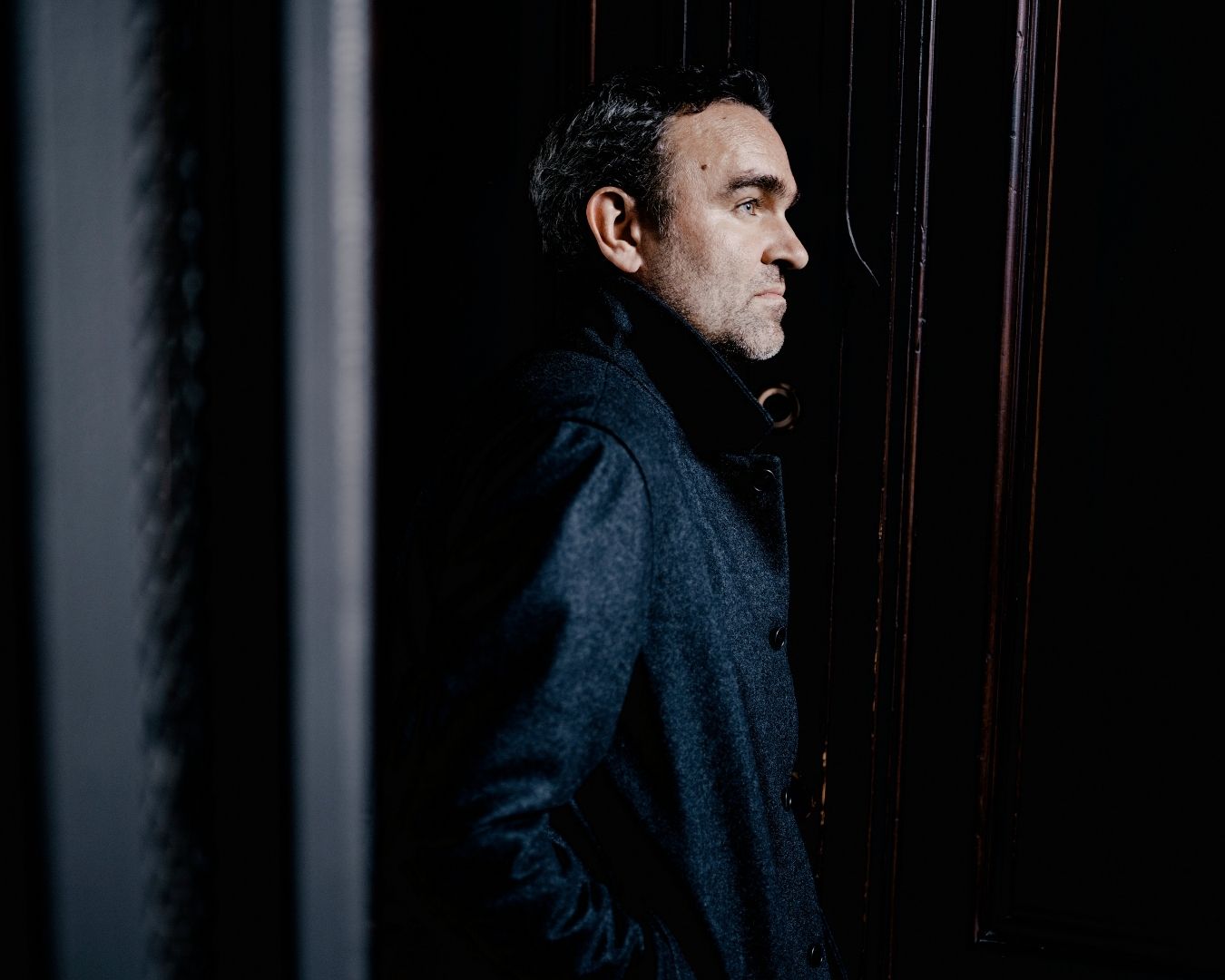
Jörg Widmann
Clarinet
Composer, clarinetist, and conductor Jörg Widmann is among the most acclaimed musicians of our time. Born in Munich in 1973, he studied clarinet at his hometown’s Hochschule für Musik und Theater and at the Juilliard School in New York and composition with Kay Westermann, Wilfried Hiller, Hans Werner Henze, and Wolfgang Rihm. As a clarinetist, he is an active chamber musician and regularly performs with artists including Daniel Barenboim, Sir András Schiff, Tabea Zimmermann, and Denis Kozhukhin as well as the Schumann Quartett and the Hagen Quartett. Composers such as Wolfgang Rihm, Aribert Reimann, Mark Andre, and Heinz Holliger have written new works for him. He has been artist and composer in residence at international venues and institutions, among them the Salzburg and Lucerne festivals, the Vienna Konzerthaus, the Cleveland Orchestra, Carnegie Hall, Cologne’s WDR Symphony, and most recently the Berliner Philharmoniker, which he has also conducted. Other orchestras he has led include the Bamberg Symphony, Freiburg’s SWR Symphony, Hanover’s NDR Radiophilharmonie, the Bavarian Radio Symphony and the Salzburg Mozarteum Orchestra. He has been a member of the Royal Swedish Academy of Music since 2024 and this past July was named the president of the International Max Reger Society. Jörg Widmann holds the Edward W. Said Chair for Composition at the Barenboim-Said Akademie and has been closely associated with the Pierre Boulez Saal since its inception.
November 2025
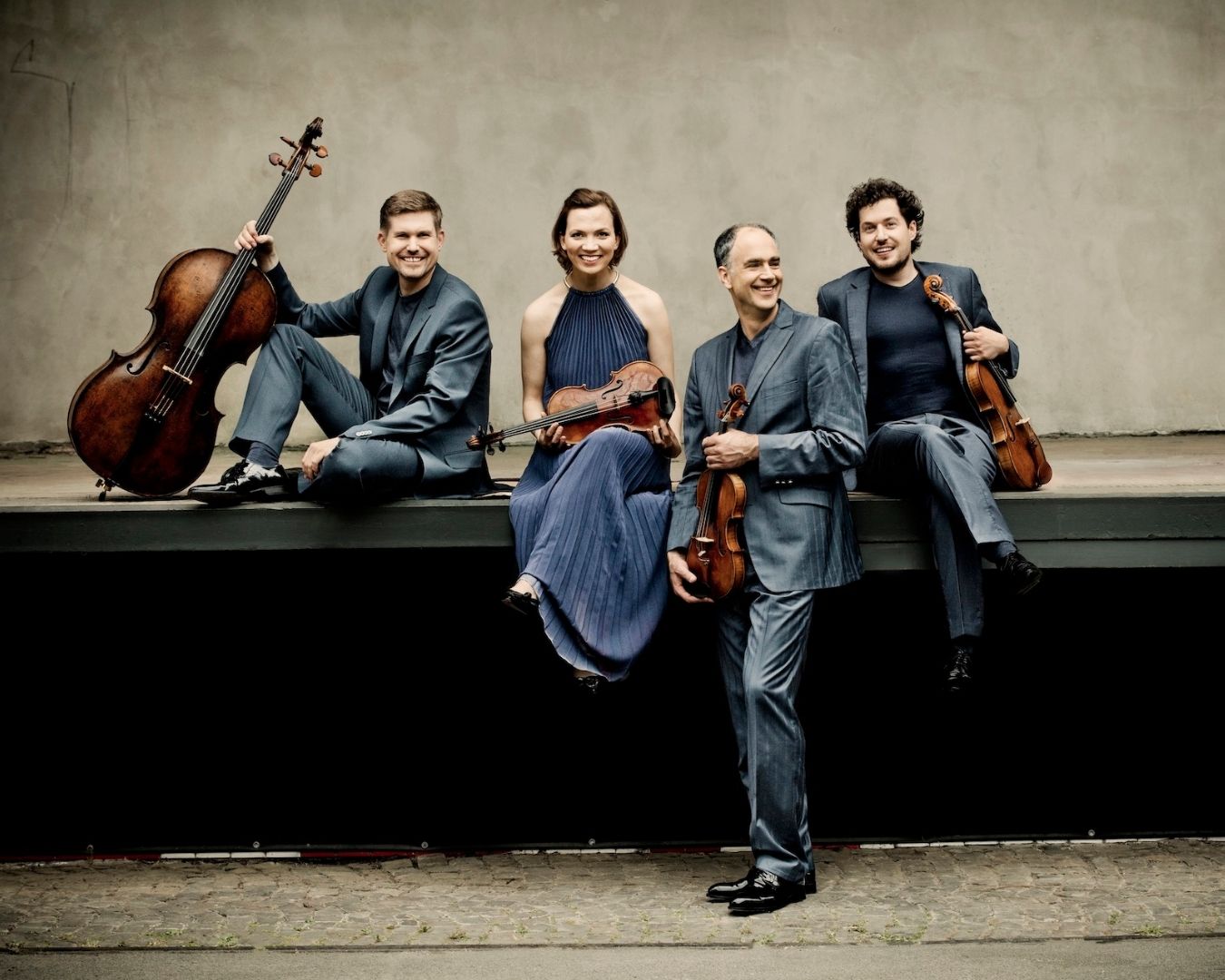
Signum Quartett
Founded in 1994, the Signum Quartett received important guidance from the Alban Berg Quartet, the Artemis Quartet, and the Melos Quartet, as well as from György Kurtág, Walter Levin, and Alfred Brendel, among others. A winner of several major competitions in its early years, the ensemble appears regularly at leading venues around the world, including the Philharmonie de Paris, Wigmore Hall, Amsterdam’s Concertgebouw, New York’s Carnegie Hall, the Vienna Konzerthaus, Hamburg’s Elbphilharmonie, and the BBC Proms. Among the group’s musical partners have been Nils Mönkemeyer, Daniel Ottensamer, Nicolas Altstaedt, Elisabeth Leonskaja, Dominique Horwitz, and Jörg Widmann. The Signum Quartet’s acclaimed recordings include works by Widmann, Wolfgang Rihm, Thomas Adès, Kevin Volans, and Erkki-Sven Tüür. Their album Lebensmuth completed a series of Schubert recordings, which won the Opus Klassik and Diapason d’or, followed in 2025 by the ensemble’s latest release A Dark Flaring featuring works by South African composers from eight decades. In 2022, the quartet founded the SIGNUM open space in Bremen, which the musicians use as a venue for rehearsals, recordings, concerts, workshops, and music education as well as for interactive dialogue with their audience.
November 2025