 Press
Social Media
Press
Social Media
The search for authenticity
By Ali Hayyan, summer 2025
In relationships, work, or our personal activities and interests, I always strive for authenticity and honesty. But I find it particularly challenging to stay true to myself when someone else is watching. Whether it’s during a performance, a conversation, or any other form of expression — the gaze and the presence of an unfamiliar energy can be a hindering factor for honest delivery. This filter, which exists as a consequence of human-formed interactions and expectations, is one of the main reasons I find it difficult to enjoy my time on stage as a classical pianist.
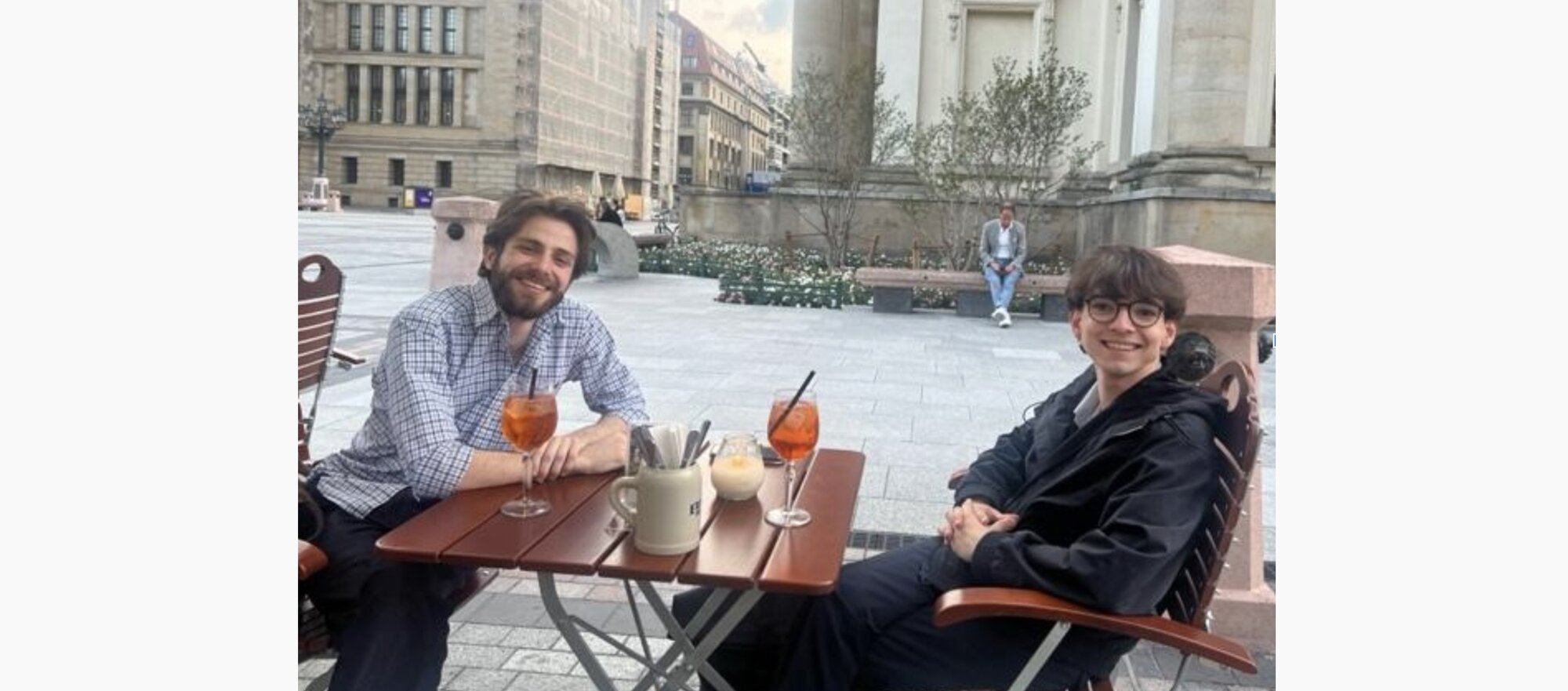
I’ve decided to share my thoughts with a really good friend of mine, someone I truly admire and respect. He's not only one of the best pianists I know, but also a person with true intellectual depth. When I watch him perform I’m always amazed at how comfortable and familiar he is with the music, the stage, and the audience. Misi Boros and I tend to agree on many things, but surprisingly, not on this topic.
A: Misi, do you feel emotionally honest on stage?
M: No. Well, yes. You asked about honesty, right?
A: Yeah.
M: Honesty is everything. It’s the only question that really matters for an artist. When an actor says "to be or not to be” I need to believe that he truly means it.
C.P.E. Bach said, and I agree: a performer has to be deeply touched by a work in order to interpret it. The audience won’t feel it unless the performer does.

A: I feel that it has a lot to do with who is listening to you. It’s easier for me to be vulnerable when I’m playing for someone who knows me well, someone I trust. Then I know that the other person understands that I’m offering them a part of myself, and they are happy to receive it. But when I’m in front of a crowd of strangers, I get self-conscious — how can I entrust a stranger with a part of myself? Being vulnerable feels too risky, and honesty becomes harder to access.
M: Not for me.
A: Why not?
M: Because I don’t divide the audience into familiar or unfamiliar. The audience is the most crucial part of performing. You must be aware of them because, in that moment, you can change their lives. A good performance can really change someone’s life. The audience is not unfamiliar. The audience is atmosphere, presence. They are full of intellect, emotion. They are the composers. Or even the Creator. If you are not honest in front of that, you have no chance. They will know.
A: That’s beautiful. When you say you “don’t divide the audience into familiar or unfamiliar,” it reminds me of the way Glenn Gould talked about performance as something sacred, something with no division between public and private.
M: The audience to me is like Beethoven. Or even higher. Every time I play, I meet Beethoven. I look into his eyes and play for him. It’s not a joke. If it were, I’d go have a smoke instead.
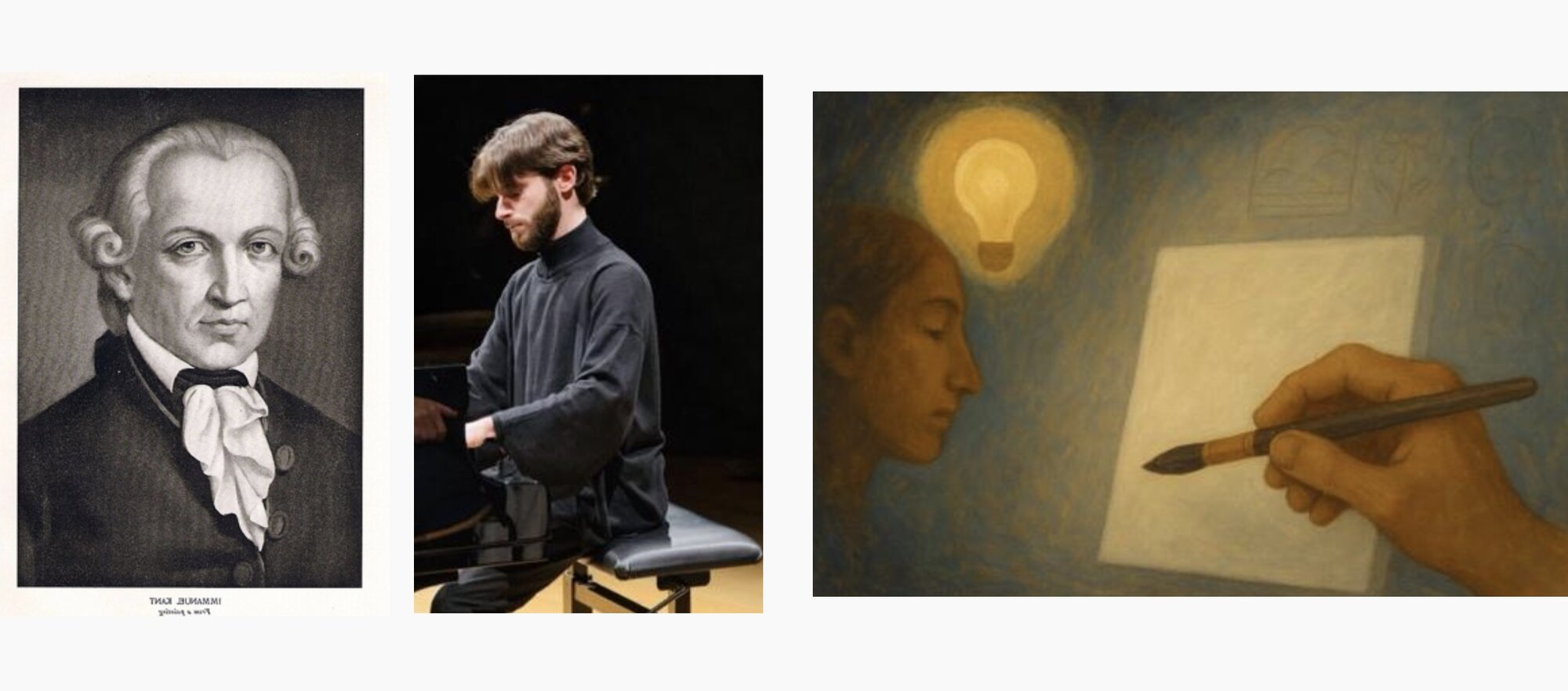
A: I have never thought of the audience as the composer themselves. I still think of the audience as “people.” And that’s probably where I get stuck. Because then I start to think about their expectations, their standards, their judgment, and then I worry whether I’m good enough. Which pollutes the intention — the intention to impress; it pollutes the sound. Perhaps it’s too Kantian of an approach for music? Because applying a Kantian categorical imperative on music would mean universalizing that intention at all times, be it playing for oneself or for an audience.
M: That’s a mistake. You don’t go on stage to show off. You focus on them. You listen to the atmosphere as if you have a sixth sense. I once spoke about this with the actor Peter Rudolf; he said that he knows exactly how the audience feels, even if a pin drops. He knows when to pause, when to build silence. Playing the piano is the same. It’s a performing art. It’s different from playing by yourself.
A: So you also feel different when you play alone or in front of an audience?
M: Oh, absolutely. I would dance at this question, it’s a major difference.
A: Yeah, for me, it’s also very different. The way I play when no one’s watching is often freer. I feel more spontaneous. But it’s also less focused. When I know someone else is listening, something changes in my body. I don’t just play the notes. I say them. I try to communicate something. So there’s more risk, but more clarity.
M: Yes, because when you perform in public, you react to the audience. That’s the main point. A good performing artist reacts. You know how to make them feel. And yes, I do that. I feel it deeply. When I play at home, even if I give 100%, it will never be the same as playing in front of an audience. You cannot compare the two.
A: I’ve heard people say that performing makes you play about 10% better. Do you agree with that?
M: Not at all. I think it’s more like 10,000 times better. It’s not even on the same scale.
A: But why does playing in public feel so different from playing in private?
M: On stage, you only have one chance. One moment. So somehow, everything, your whole being, the whole piece, gets channeled into that one moment. That moment becomes sacred. And that only happens on stage.
A: I feel like everything begins with intention. Or maybe not. I don’t know. I want to believe that it does. That if my intention is good, then the sound will be good. But when the intention gets polluted by fear, ego, or anxiety, the sound gets polluted too.
M: Yes. Yes! I know what that means. Everything begins with intention, completely.
So eventually, we did agree on something, and I learned a lot from talking to my pianist-philosopher friend. I clearly don’t have all the answers, but I do hope to enjoy searching for them, on stage and off it.